✦ Fiction: literary, classics, & sci-fi/speculative fiction
✦ Non-fiction: linguistics, polar exploration, mythology, animals, philosophy & essay collections
✦ Themes: queerness, water, gender, language, posthumanism, labyrinths, animals & time
✦ Style: I love lyrical & experimental prose
Click on a book to see my favourite quote and thoughts!
"Te escribo entera y siento un sabor en ser y el sabora-ti es abstracto como el instante. También con todo el cuerpo pinto mis cuadros y en el lienzo fijo lo incroporeo, yo cuerpo-a-cuerpo conmigo misma. No se comprende la musica, se escucha. Escuchame entonces con todo su cuerpo."
Traducido por Elena Losada Soler
"I write to you wholly and taste a flavour of being and the flavour-of-you is abstract like the instant. I use my whole body when I paint too, I pin the incorporeal to the stiff canvas, I body-to-body with me myself. You don't understand music; you listen to it. So listen to me with your whole body."
Translated by me from Elena Losada Soler's Spanish translation
"All of me is writing to you and I feel the taste of being and the taste-of-you is as abstract as the instant. I also use my whole body when I paint, and I set the bodiless upon the canvas, my whole body wrestling with itself. You don't understand music: you hear it. So hear me with your whole body."
Translated by Stefan Tobler
"Escrevo-te toda inteira e sinto um sabor em ser e o sabor-a-ti é abstrato como o instante. é também com o corpo todo que pinto os meus quadros e na tela fixo o incorpóreo, eu corpo-a-corpo comigo mesma. Não se compreende música: ouve-se. Ouve-me então com teu corpo inteiro."
"There is no future, only the onslaught of time, uncountable, vacuous, amorphous time, towards which she is expected to move."
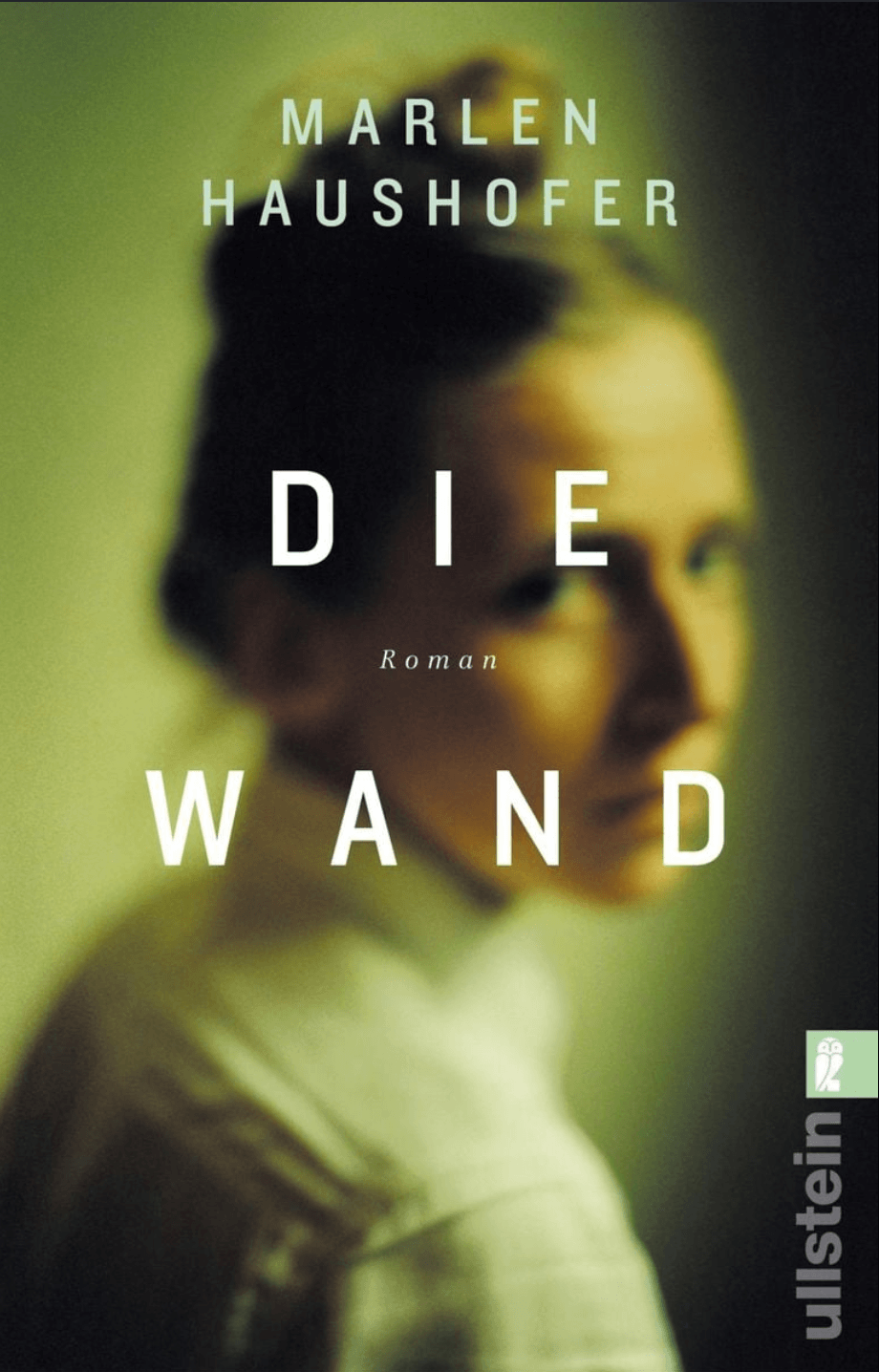
"Ich konnte ruhig vergessen, daß ich eine Frau war. Manchmal war ich ein Kind, das Erdbeeren suchte, dann wieder ein junger Mann, der Holz zersägte, oder, wenn ich Perle auf den mageren Knien haltend auf der Bank saß und der sinkenden Sonne nachsah, ein sehr altes, geschlechtloses Wesen... einem Baum ähnlicher als einem Menschen."
"I could easily forget that I was a woman. Sometimes I was a child, on the search for strawberries, then a young man sawing wood, or, when I sat on the bench with Pearl upon my lap and watched the sinking sun, a very old, genderless being... closer to a tree than a human."
Translated by me
To be added
Translated by Shaun Whiteside
"I have always felt my body moves itself- possesses it's own will, character, it's own thoughts. I experience my body as other but also as another. Slightly animal, otherworldly almost, a pulse and breath not my own."
"The shades of gender in her voice were intricate, like mine."
"The men smile and I remain on the outside, frustrated, solitary, locked in this woman's body which has always been fearful, and which I dare not quit."
Translated by Ros Schwartz
To be added
"Plotzlich wurde mir alles klar:... er war ein zutiefst verlibter Mensch. Aber er war nicht einfach in einen anderen Menschen verliebt, sondern es war eine andere, alles umfassende Liebe zum Leben und zur Erde. Diese Liebe erfullte ihn ganz, sie klang aus seinen Liedern, sie war sein Leben."
Translated by Gisela Drohla
"Suddenly it was all was clear to me:... he was a deeply in-love person. But he wasn't just in love with another person; it was a different, all-encompassing love- for life and for the world. This love filled him completely, it flowed from his songs, it was his life."
Translated by me from Gisela Drohla's translation
"Suddenly I understood his strangeness which made people shrug and smile...This was a person who was deeply in love. And I felt that this was not merely a love for another person, it was different, it was a tremendous love--of life, of the earth. Yet he kept this love within himself, in his music--it was his guiding light."
Translated by Fainna Glagoleva
"И изведнъж ми станаха понятни странностите му, които предизвикваха у хората недоумение и насмешки.... Той бе дълбоко влюбен. И при това бе влюбен, аз го почувствувах, не просто в друг човек: това бе някаква огромна любов — към живота, към земята. Да, той таеше тази любов в себе си, в песните си, живееше с нея. Да бе равнодушен човек, не би могъл да пее тъй, какъвто глас и да имаше."
"...his limbs grew heavy on the ground; and he lay so still that by degrees the deer stepped nearer and the rooks reeled round him and the swallows dipped and circled and the dragonflies shot past, as if all the fertility and amourous activity of a summer's evening were woven web-like around his body."
This was the first book I read by Virginia Woolf, and I immediately fell in love with her writing style. So much so that I ended up writing an essay about Orlando , along with another favourite of mine inspired by it, Orlanda by Jaqueline Harpman, for my queer literature class. I am planning to edit and share that essay at some point, but for now this review will have to suffice.
The book follows the titular Orlando throughout their life, which spans over a period of centuries, with a beautiful, flowing, and introspective style. What it is probably most known for is that mid-way through the book Orlando “changes sex”, allowing Viriginia Woolf to examine the gender roles of the time. In addition to this, it is of course important to consider the context surrounding its production. The book was written as a love letter to Orla Sackville-West, Virginia Woolf’s lover, with Orla herself inspiring the character of Orlando. The year it was published, 1928, marked the 10 year anniversary of WW1, an event that greatly impacted Virginia Woolf’s writing along with the rest of the world, and also brought about the Equal Franchise Act which gave women equal voting rights to men, although women still faced many difficulties.
It is astonishing that in a year in which women and queer people still faced so much oppression, Virginia Woolf was able to publish a book that so obviously presented queer themes, and laid out the idea of gender as “performance”, 21 years before De Beauviour would famously write “one is not born, but becomes a woman” . From the opening line, it is obvious that gender is going to be a theme: “He - for there could be no doubt of his sex, though the fashion of the time did something to disguise it- was in the act of slicing at the head of a Moor which swung from the rafters.” This sentence exemplifies the type of long, detail-filled sentences Woolf excels at, but unfortunately also exemplifies the racism which is present in Woolf’s writing. This racism definitely detracts from the value of this work as one that argues for equal rights for women and queer people, as it only does so for white women and white queer people. This is one reason I prefer Orlanda, which does not feature such racism. There are also other adaptations and works inspired by Orlando which seek to challenge this racism, such as Orlando, My Political Biography by Paul B. Preciado.
Orlando is often read as a transfeminine book, due to Orlando going from a man to a woman, but from reading Orlanda , I instead approached it as a book representative of a transmasculine experience. In Orlanda , the main character theorises that Orlando did not actually change sex, and was instead born a girl but believed she was a boy until she reached maturity and was forced to accept becoming a woman, arguing that it was natural for a girl to feel like a boy as all girls were jealous of boys, mirroring Freudian ideas of “penis envy”. Growing up as a girl-who-wanted-to-be-a-boy, I would argue that not all girls wanted to be boys, especially not to the extent that they would view themselves as one, which is why Orlando, to me, rather represents a transmasculine person who is forced to become a woman. It was lovely to read a book written nearly a century ago that mirrors my experiences as a trans person.
As well as trans readings, this book is also significant for its feminist readings. Having stayed with nomadic people in Turkey, Orlando doesn’t start to realise the difficulties of being a woman until she boards a boat back to England, representative of the oppressive and heavily enforced gender roles in Britain at the time. She sits down on the boat with her new outfit, a large swirling dress, and immediately thinks to herself “Could I, however, leap overboard and swim in clothes like these? No! Therefore, I should have to trust the protection of a blue-jacket.” . This quote beautifully illustrates how women are forced to be weak and rely on men through beauty standards, with women expected to be thin, defenseless, and in oppressive clothing. Clothes were a large theme throughout the book, also being used to represent the performative nature of gender.
Gender is not only presented as something serious, but also as fun and playful, which blends with the overall style of the book. Time is stretched to allow Orlando to live across multiple lifetimes, their sex changes midway through the book, and no explanations are offered. Following her sex change, Orlando does not change her name, but continues using her masculine name. Similarly, she does not stop enjoying relationships with women or wearing men’s clothes when she wants, but instead embodies and enjoys this mixture of gender markers. As a trans person, I enjoyed this resistance to labels and explanations, as I often find myself having to answer the same questions about my gender over and over again, so Orlando’s playful resistance is refreshing. “Whether, then, Orlando was most man or woman, it is difficult to say and cannot now be decided.”
I, however, don’t fully agree with Virginia Woolf’s concept of gender. Paraphrasing from her non-fiction book, A Room of One’s Own, Woolf suggests that within us all we have a “male” and “female” aspect of our soul, with the “female” part being stronger in women, and the “male” stronger in men, and this idea is evident in Orlando. I think this theory, rather than contributing to a deconstruction of the gender binary, rather enforces it. It suggests that “male” and “female” as genders are something concrete and recognisable, rather than culturally constructed and variable. It also doesn’t account for people who do not feel like either of these genders, or for people who feel like something different. I think a full elaboration on my understanding of gender is beyond the scope of this review, but I appreciated how it prompted me to think deeper. Being able to challenge your readers and encourage them towards introspection is a trait of a great writer.
Finally, to return to the quote I chose for this book, I love the slightly magical and whimsical feel of this book. Reading it felt like sitting in the countryside and watching birds flitting along the side of the river. The style, which was unique for a British author at the time, matches perfectly to the content, and made it a delight to read.
Date read: 22.12.2025
Date review written: 06.08.2026
"Es muss zwischen Sprachen eine Kluft geben, in die alle Wörter hineinstürzen. "
"There must be a rift between languages into which all words fall."
Translated by me
"With his help, the tree trunks revealed their secrets to me. The most ordinary stumps turned out to be entire kingdoms of Creatures that bored corridors, chambers and passages, and laid their precious eggs there. The larvae may not have been beautiful, but I was moved by their sense of trust – they entrusted their lives to the trees, without imagining that these huge, immobile Creatures are essentially very fragile, and wholly dependent on the will of people too."
Translated by Antonia Lloyd-Jones
"Przy jego udziale kłody pozwoliły odsłonić przed moimi oczami swoje tajemnice. Zwykłe pnie drzew okazały się całymi królestwami Stworzeń, które drążyły korytarze, komory, przejścia i składały tam swoje drogie jaja. Larwy może nie były zbyt piękne, ale wzruszała mnie ich ufność — powierzały swoje życie drzewom, nie przypuszczając, że te ogromne nieruchome Stworzenia są w istocie tak kruche i na dodatek całkowicie zależne od woli ludzi."
"I couldn't say for certain, but I think this was when the certainty struck me that studying the Mulai was nothing more than a form of auto-ethnography. Only there, so far from home, could I ask myself why we handle births in the same places as illnesses. Is birth an illness? Is healing a birth? Whether these questions are valid or trivial, what's certain is that I never would have been able to formulate them without having lived with the Mulai; only through encounters with the other are we given the chance to see ourselves."
Translated by me
"No podría asegurarlo, pero creo que ésa fue la primera vez que me asaltó la certeza de que el estudio de los mulai no es sino una forma de autoetnografía. Sólo allí, tan lejos de mi hogar, pude preguntarme por qué atendemos los partos en el mismo lugar que las enfermedades. ¿Es el nacimiento una enfermedad? ¿Es la sanación un nacimiento? Sean esas preguntas válidas o triviales, lo cierto es que nunca habría podido formularlas si no hubiera convivido con los mulai; solamente en el encuentro con el otro nos es dado vernos a nosotros mismos."
"Perhaps I have tried to create time through writing these pages. I begin, I fill them with words, I pile them up, and I still don't exist because nobody is reading them...But if that person comes, they will read them and I will have a time in their mind. They will have my thoughts in them. The reader and I thus mingled will constitute something living, that will not be me, because I will be dead, and will not be that person as they were before reading, because my story, added to their mind, will then become part of their thinking."
Translated by Ros Schwartz
"Peut-être ai-je essayé d'en créer en écrivant ces pages : je les commence, je les remplis de mots, je les empile, et je n'existe toujours pas puisque personne ne les lit. ...Mais s'il vient, il les lira et j'aurai un temps dans sa tête. Il aura mes pensées en lui : lui et moi ainsi mêlés constituerons quelque chose de vivant, qui ne sera pas moi, puisque je serai morte, et qui ne sera plus lui tel qu'il était avant la lecture, puisque mon histoire, ajoutée à son esprit, fera désormais partie de sa pensée. "